Meet the Expert
Meet the Expert
A salon owner and director-level stylist with over 15 years of experience, Leona has seen every type of hair damage with her clients. Her expertise in haircare solutions makes her the perfect guide to help you understand and address the root causes and best treatments for damaged hair.
What does damaged hair look like?
What does damaged hair look like?
It’s said that identifying a problem makes half of the solution – and hair concerns are no exception. To see if you have damaged hair, check for the following signs of weakened fibres and hair stress:
- Dry and brittle texture
- Dull and lacking shine
- Little to no bounce or elasticity
- Split ends
- Tangles easily
- More porous, so hair drinks up products…
- But styling products don’t work as well
- Texture isn’t smooth
- Colour may have changed
Expert tip: Leona shares some key signs of damaged hair: “Dryness and frizziness doesn’t mean hair is damaged. Instead, damage is brittle, rough to the touch in the midlengths and ends, and has no strength left to it.”

How to know if your hair is damaged
Often, you can tell your hair is damaged because the signs are highly visible. However, it’s important to know how damaged your hair really is. Our hair diagnostic tool is designed to analyse hair concerns and goals can help spot the signs of hair damage and tailor a haircare routine.
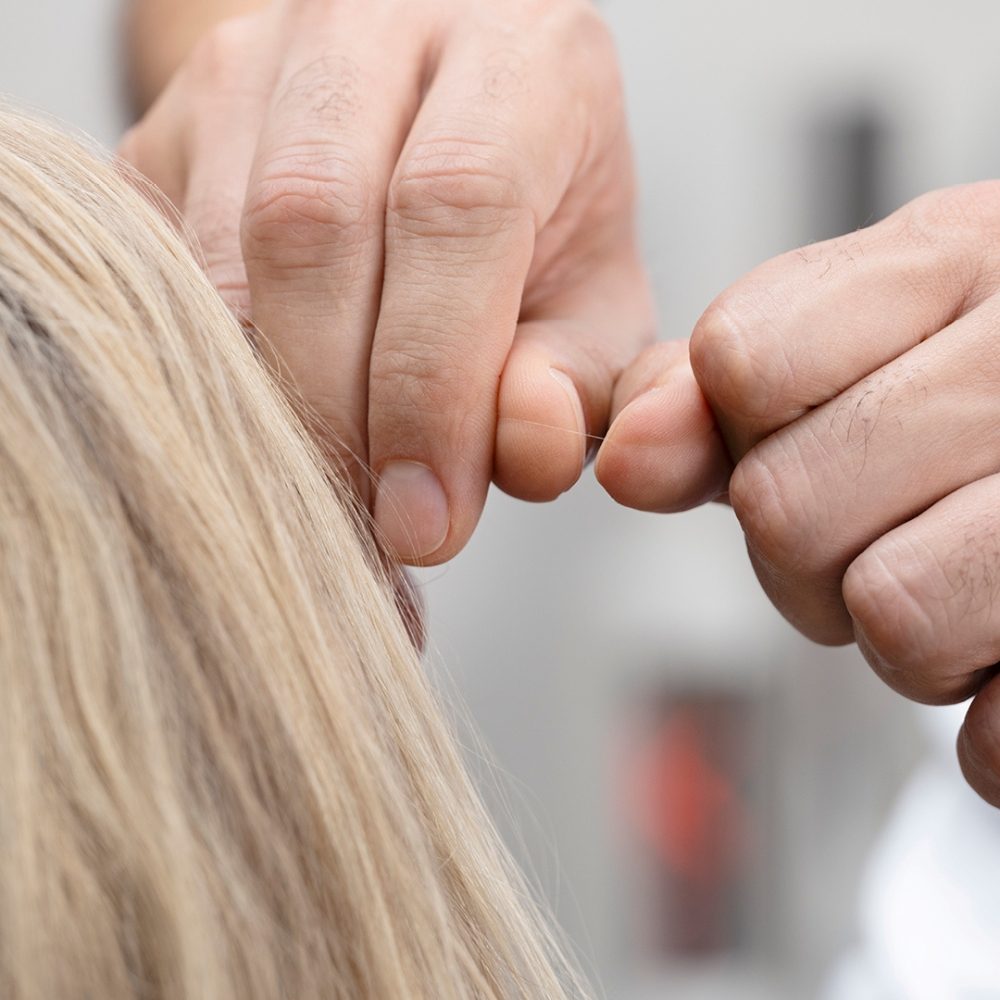
Alternatively, head to any Kérastase salon and as part of the diagnosis at the start of your appointment, your hairdresser can carry out a Resistance Test. This involves taking just one strand of hair and gently stretching it.
If it stretches and returns to normal = strong resistance.
If it stretches and remains slack = lacking strength (erosion level 1-2).
If it snaps = very damaged (erosion level 3-4).
Your hairdresser will also talk to you about your current styling routine and the products you use to understand what could be causing the damage, how to fix it and prevent it in future.
Expert tip: Leona shares a hairdresser trick for spotting very damaged hair: “When we check how damaged hair is, in extreme cases, it can end up being like chewing gum when it’s wet with no elasticity left. When we pull it, it’s just breaking, and it doesn’t return to its original shape. That’s in rare cases of heavy chemical damage.”
What causes hair damage?
Busy lives, frequent colour changes, and everyday environmental stress – sounds familiar? All these factors play a part in hair fatigue leading to damage. To find the best damaged hair solution for you, let’s identify the causes for your hair.
Mechanical Hair Damage
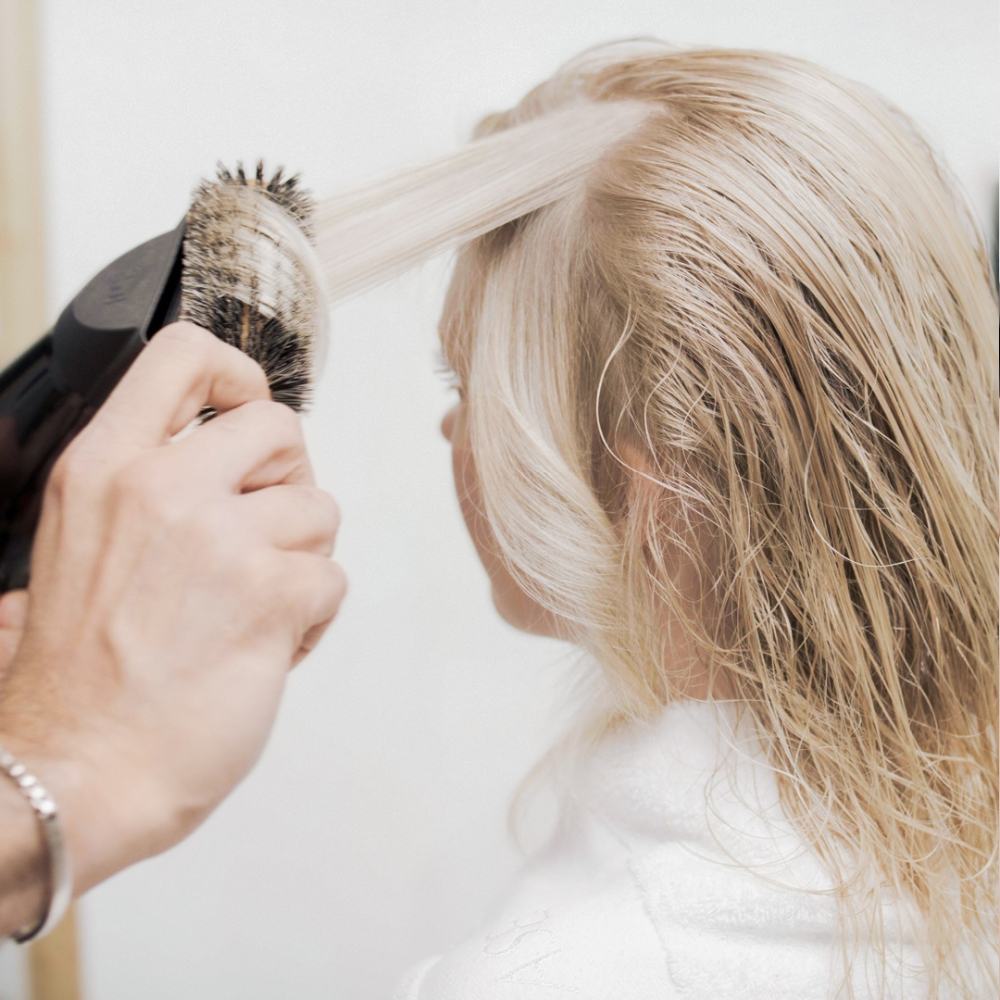
Harsh or wet brushing, heat styling or excessive blow-drying cause friction to the hair, resulting in mechanical damage. While heated stylers are a part of our daily routines for many, it’s no secret that the heat from our favourite tools compromises hair health.
Frequent use of straighteners, curlers and dryers changes the shape of hair’s keratin strands, exposing the inner cortex and leading to dry and weak hair. Heat hair damage will be visible on the cuticle – you’ll notice dry, dull strands, a texture change and breakage. Application of heat protectants and rest periods from tools helps reduce the impact of styling on your hair.
Chemical Hair Damage
Chemical damage is just that, damage caused by chemicals. This could be poorly applied permanent colour at home, bleach hair damage, hard water, or in-salon services that haven’t been carried out with care such as colouring, perming or straightening hair treatments. Highlights, balayage and whole-head bleaches alter hair’s protein structure and can result in damaged hair cuticles.
The damage can also go deep into the cortex, which often leads to colour and texture change, excessive hair breakage, as well as the appearance of dull, dry hair. That’s why the right aftercare treatments and routines are needed to prevent colour loss alongside breakage.
External Damage
Alongside behavioural stress, dry damaged hair can result from the weather in all seasons. Every day, our hair comes into contact with pollution and UV rays. In winter, cold conditions can dry out the scalp, leading to discomfort and weakened strands. Humid weather can bloat strands, and UV radiation throughout the year can reduce moisture, causing hair damage from the sun.
These external factors can attack our hair leading to texture and colour change, as well as weakened strands that are more prone to breakage. Proper sun protection such as caps and sunscreen along the hairline can help to repair damaged hair.
Expert tip: Is it possible to tell the difference between different kinds of hair damage? Leona says, “Heat damage is often visible around the hairline. If people are over-straightening their hair, they might have frizzy, broken hairs around the hairline, where the strands are finest.
“Chemical damage is most visible when the hair is wet. Damaged hair tangles and will not reform back to its natural shape, as it’s so weakened at that point. When it’s dry, it will be brittle with snapping and breakage.”
The science behind damaged hair
Healthy hair is abundant in lipids that cement the hair cuticles together, ensuring a smooth strand that is impermeable, strong and shiny. Keratin is another essential component of healthy hair. It’s a protein consisting of amino acids, and is responsible for the hair’s inner cohesion, creating an internal fiber backbone. Hair with the optimal level of keratin is strong and healthy.
Lastly, there are KAPS (keratin associated proteins) which are micro-proteins found in healthy hair that bond and link the keratin together. KAPS are only found in hair, virgin hair is abundant in KAPS, but disappear when hair is damaged. But fear not – when damage occurs, high-quality haircare rich in proteins can help you take back control.
How to repair damaged hair
To address hair damage, you need a nourishing haircare routine. Here are five expert tips on how to fix damaged hair and prevent further damage.
1. Use Fewer Heat Styling Tools and Skip the Colour
A key part of caring for damaged hair
is rest. If you don’t leave home without using heat stylers, this is your sign to lessen use for a
little while. Dry, damaged hair can struggle to retain hydration – allowing time between heat
styling can support moisture retention. When you do use tools, ensure strand structure is covered
with a heat protectant like Resistance Ciment
Thermique Heat Protector.
If your hair is damaged from colour, it needs some time to recover before you can safely colour it
again.
2. Adopt A Repairing Hair Care Routine
Adjustments to your hair routine are most likely needed to repair hair damage. Dehydrated strands and compromised hair structure require intense nourishment and potently supportive ingredients.
If you’re wondering how to fix damaged hair, commitment to reparative products and routines is key. For example, the Première range for damaged hair from Kérastase is formulated to visibly repair all types of damage caused by heat styling, colour treatments, and over-processing. If you want to strengthen hair, the Résistance range is designed for anti-breakage by reinforcing the structure of weakened hair.
Expert tip: Leona recommends the following haircare routine for her clients in the salon: “When you’re at home, you should be looking after your hair with a shampoo, conditioner, heat protector and a treatment once a week. To achieve the healthiest hair, and the result you ultimately want, you need to maintain your hair at home, too.”
3. Use Treatments Regularly
Just like with skincare, weekly to fortnightly treatments can be used to further hydrate and strengthen dry, damaged hair. The skincare-inspired approach of Kérastase haircare products infuses each step with efficacious ingredients. You can choose a treatment for damaged hair, from extra nourishing products like hair masks to hair oils and serums, such as the Première Intensive Shine Repairing Hair Oil.
Expert tip: Leona says hair treatments are one of the most important parts of a haircare routine: “Hair treatments, like a mask, oil or serum, give you the most intense level of repair. That is my ride or die for damaged hair.”
4. Consider an In-Salon Treatment
Professional stylists can help your hair repair journey. If you’re looking to repair damaged hair before changing shades or want to know how to repair damaged hair that is particularly brittle, consider an intensive salon treatment. For damaged hair, we recommend Première in-salon treatment or a Fusio-Dose In-Salon Hair Routine tailored to damaged hair. These are exclusively available from partner salons.
5. Wash Hair Less
Washing helps to purify the scalp and strands and re-implement ingredients like ceramides back into hair. There can be too much of a good thing, though – washing hair more than once or twice per week can strip hair of natural oils. Opt for gentle formulas when supporting dry damaged hair, such as Resistance Bain Therapiste Shampoo and Resistance Fondant Extentioniste Conditioner, and allow rest-time between washes.
Shop Kérastase products for damaged hair
Kérastase has two collections that are tailored for damaged hair and offer a complex approach to hair repair treatment.
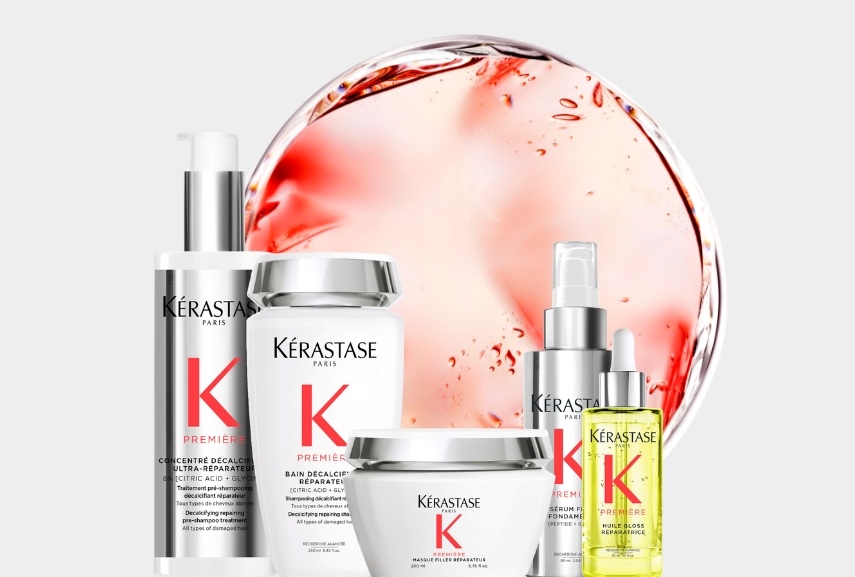
Première, a potent formula for damage repair, works to remove calcium build up and visibly repair all types of damage caused by heat styling, colour treatments, bleaching and over- processing.
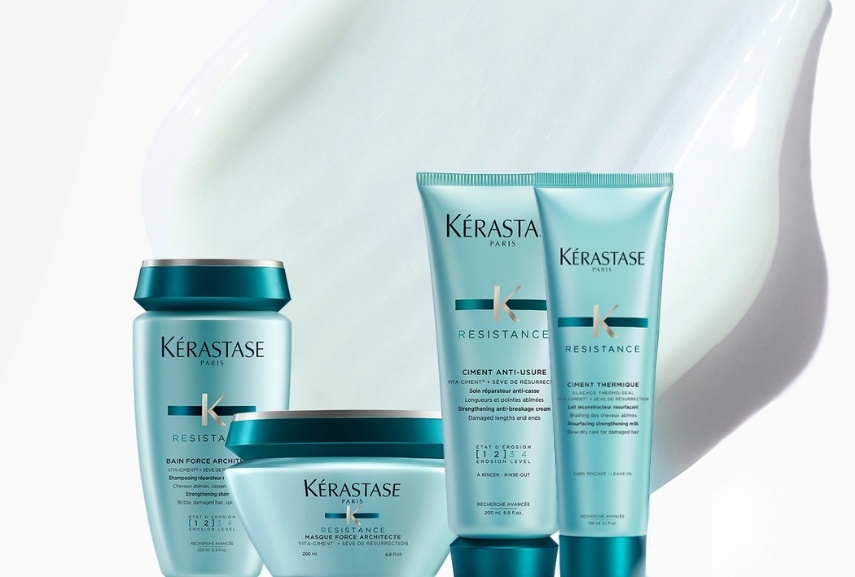
Résistance is an anti-breakage haircare range which helps the structure of weakened hair to strengthen and reinforce the fiber, creating strong hair from roots to tips.
Damaged Hair FAQs
How often should you wash dry, damaged hair?
Aim to wash dry, damaged hair every five to seven days to allow the scalp’s natural oils to recuperate. Try applying a hair oil or serum to dry ends between washes for added shine and to protect your lengths from the elements. As hair health regenerates, you may opt to shampoo more regularly.
Why does damaged hair take longer to dry?
Chemical and heat damaged hair can become more porous, causing it to absorb and retain more water than healthy hair. This will be evident during the drying and styling process as damaged hair can take longer to dry. Hair masks and nourishing conditioners can assist with reducing porosity, helping hair recover from damage over time.
Does blow drying damage your hair?
As blow drying is a method of heat styling, it can damage hair and dry it out. But there’s no need to stop blow drying your hair entirely. If you’re learning how to repair damaged hair, consider cutting down on heat styling and incorporating Thermique creams, serums and conditioners into your routine.
Do brushes damage hair?
Brushing hair roughly or over-brushing has the potential to damage your strands. When caring for damaged hair, we recommend brushing hair gently a few times a day with a brush that does not tug on hair excessively. Curly and coiled hair types may prefer a wide tooth comb or bristle brush. Always comb from the lengths first and make your way toward the roots to avoid overstretching the hair. It’s best to use a wide tooth comb.
Can hot water damage hair?
Exposing the hair to hot temperatures while washing can cause stress to hair and result in frizz or breakage. If you’re seeking how to fix damaged hair, try washing hair with warm or lukewarm rather than piping hot water. Much like when using hair styling tools, applying very hot temperatures to damaged hair should be avoided.
How to use Kérastase Résistance
Build your routine for dry damaged hair from start to finish with Kérastase Résistance. Wash and condition hair with Résistance Bain Extentioniste Shampoo and Résistance Fondant Extentioniste Conditioner, ensuring you leave the conditioner on for 2-3 minutes before rinsing. Towel dry and style hair with your styling product of choice – we recommend the Résistance Extentioniste Thermique Hair Protection for healthy lengths and heat protection.
What are the best Kérastase products for damaged hair?
The Kérastase Première range and
Résistance range are formulated especially for damaged hair.
Première has a potent formula for damage repair,
working to remove calcium build up and visibly repair all types of damage caused by heat styling, colour treatments,
bleaching and over-processing.
Résistance was created to nourish damaged hair from the inside out, helping hair appear healthier and more
resilient.
If your main concern is hair fall due to breakage, the Genesis
range is supercharged with ingredients to fortify and
nourish the hair.
What is the best shampoo for damaged hair?
For how to fix damaged hair, opt for shampoos tailored to weakened and damaged hair. In the shampooing stage of hair care, dry damaged hair requires a gentle wash that doesn’t compromise on that clean, refreshed feeling. We suggest the Résistance Bain Force Architecte Shampoo – it works to strengthen hair fibres and protect from further damage, with elasticity-promoting ceramides and Pro-Keratine Complex to supplement hair. You can also use Kérastase Première Bonding Pre-Shampoo Hair Treatment to reinforce the bonds of damaged hair prior to shampooing.
What are the best hair products for damaged hair?
For damaged hair that requires a dose of hydration, bond repair and protection, adding a hair mask such as the Première Bonding Anti-Breakage Filler Hair Mask or Rèsistance Masque Extentioniste Hair Mask to your regime can be beneficial. Using a weekly or twice-weekly hair mask on damp hair can introduce strengthening ingredients to your routine and assist with hair recovery. You can even replace your conditioner with a hair mask for additional nourishment.
What is the best hair mask for damaged hair?
For growing, damaged lengths, we recommend using the Resistance Masque Force Architecte twice a week to add lustrous shine. Saturate a chestnut-sized amount throughout hair lengths, segmenting hair into layers if needed for thorough application. Gently massage with fingertips and leave in for 5 minutes. Add water to emulsify and rinse for glossy, healthy hair.
What is the best conditioner for damaged hair?
Dry damaged hair requires a little extra in the hydration and protection department to allow strands to heal - to meet these needs, try our Première Bonding Advanced Repair Conditioner or Résistance Ciment Anti-Usure Conditioner. They were created to help reconstruct hair fibres, seal in moisture and add elasticity for an anti-breakage effect.
What is the best hair treatment for damaged hair?
The best hair treatment for damaged hair combines personalisation, potent formulas and lasting effects. We recommend Premiere in-salon treatment as the leading treatment for damaged hair, or for an instant treatment, Fusio-Dose In-Salon Hair Routine - a four-step salon treatment designed to transform hair condition in just 5 minutes.